
What Black and White Photography Teaches the Eye
There is a version of the world many people rarely notice—not because it is hidden, but because color often dominates attention. Bright tones, vivid contrasts, and familiar palettes can direct the eye toward obvious subjects while distracting from the deeper structure of an image.
That is where black and white photography becomes powerful. By removing color, it shifts focus toward light, shadow, form, texture, and emotion. What remains is often the true foundation of a photograph.
Color Can Distract from Composition
Color is one of the strongest visual tools in photography. A red door, golden sunset, or blue sky naturally pulls attention. While color can create beauty and impact, it can also do much of the work for the photographer.
Without strong composition, many colorful scenes lose their power once converted to monochrome. A bright subject may simply become ordinary when stripped of its hue.
This is why black and white photography can be such an effective teacher. It exposes whether an image truly works based on its essential elements:
- Light
- Shadow
- Geometry
- Shape
- Balance
- Texture
When color disappears, there is nowhere for weak composition to hide.
Seeing Structure Instead of Surface
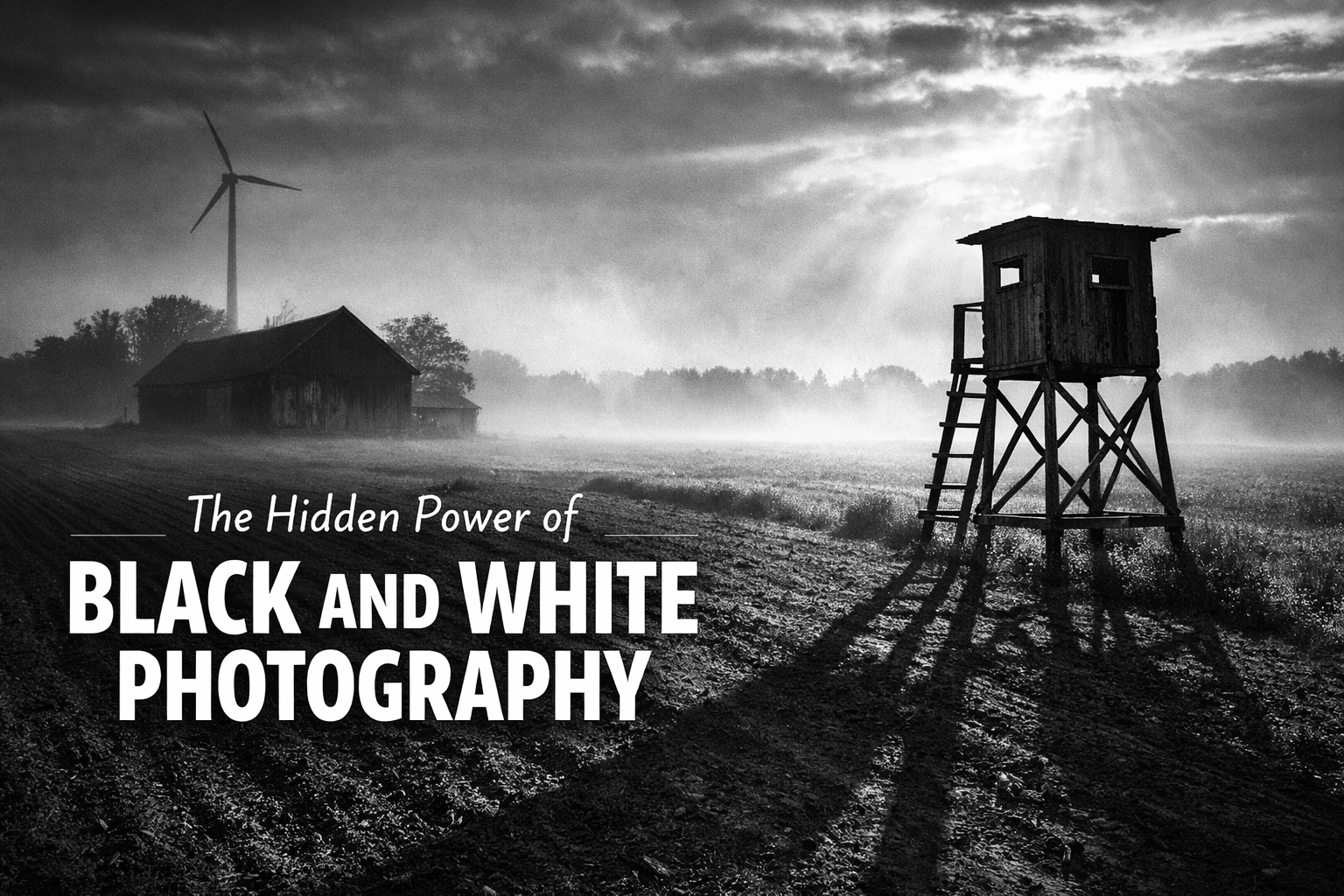
A countryside road, an old barn, or an open field may appear simple in color. Green grass, blue skies, and painted buildings often create an attractive but familiar scene.
In black and white, however, the viewer begins to notice something deeper:
- The long shadow stretching across a field
- The sharp line of a fence fading into mist
- The contrast between sky and land
- Repetition in shapes and textures
Suddenly, the subject is no longer the landscape itself, but the visual structure inside it.
This is one reason black and white photography often feels more intentional. It asks the viewer to notice what was always there.
Black and White Is Not One Style
Many people think monochrome photography is simply a filter or preset. In reality, black and white contains a wide emotional range.
High Contrast Black and White
Deep blacks, bright whites, and hard edges create drama and tension. This style is common in street photography and urban scenes where urgency, movement, and graphic shapes dominate.
It can feel bold, cinematic, and confrontational.
Soft Tonal Black and White
Lifted shadows, subtle midtones, and gentle grays create a completely different mood. This approach often feels quiet, reflective, and timeless.
It can resemble memory—something half-remembered rather than sharply documented.
Understanding this distinction changes the role of editing. Tonal choices are not just stylistic decisions; they are emotional ones.
Why Black and White Photography Improves Color Photography
One of the most surprising benefits of black and white photography is that it often improves work in color.
Once the eye learns to notice:
- Direction of light
- Contrast between dark and bright areas
- Shape within a frame
- Negative space
- Lines and geometry
those habits remain even when color returns.
Instead of chasing bright objects or eye-catching tones, photographers begin to see the underlying structure first. Color becomes an added layer rather than the main attraction.
This often leads to stronger compositions, cleaner framing, and more deliberate storytelling.
A Powerful Exercise for Any Photographer
For anyone struggling with composition, shooting only in black and white for a few weeks can be a valuable exercise.
It trains the eye to simplify scenes and identify what truly matters. Many photographers discover that once they stop relying on color, they begin to understand visual design more clearly.
Even temporary practice with black and white photography can sharpen awareness in every genre, from street photography to landscapes and portraits.
More Than Removing Color
At its core, black and white photography is not simply the absence of color. It is a creative decision about what the image should communicate.
Color often records reality. Black and white interprets it.
It says:
- This is about mood
- This is about shape
- This is about contrast
- This is about feeling
That is why monochrome images often feel timeless. They do not pretend to be literal representations of the world. Instead, they offer a translation of reality into emotion.
Final Thoughts
Black and white photography teaches photographers to see differently. It reveals the bones of an image, strengthens composition, and transforms ordinary scenes into studies of light and form.
Whether used as a long-term style or a short-term exercise, it remains one of the best ways to develop a stronger photographic eye.
Sometimes, the clearest way to see the world is without color at all.

0 Comments